SUB-MINIMUM WAGE, IT’S A THING

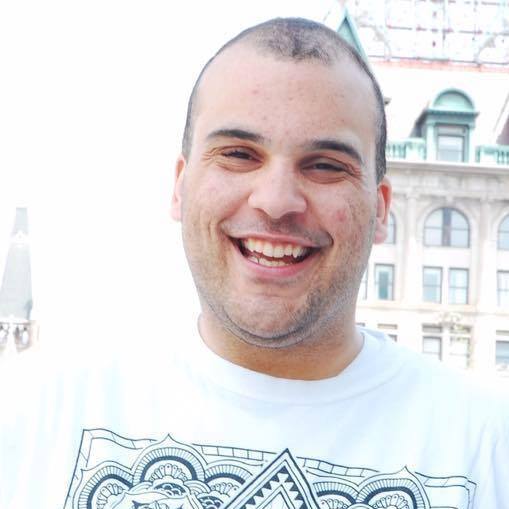
Lester headshotHowdy readers. Last week I was able to attend the National Federation of the Blind’s National Convention in Orlando Florida (NFB 2016). This convention is a gathering of over two-thousand blind people all with different backgrounds, from Stanford and Harvard Law graduates, to factory workers. I was introduced to so many brilliant people and was told so many different stories.

During NFB 2016, one of these stories came in the form of panels that were being held, and one panel I attended was on blind factory workers. As a millennial who faces job offers that pay non-liveable wages, I find the minimum wage to be extremely dehumanizing; so when I got to this panel I was horrified — going into it I thought they would be discussing unionization of factory workers, but I found out these factory workers were trying to organize not because they were getting paid minimum wage and deserved more, but rather to have a support group and a think tank for people who were being paid sub-minimum wage. Sub-minimum wage is defined as a wage that is lower than the established minimum wage. Up until this point in my life the only position I knew about that got paid this were servers, but I knew that chain restaurants were required to pay them minimum wage if servers didn’t make enough in tips. During this session I heard a story about a man who was a victim of this cruel and usual treatment, he was involved in a lawsuit and all he was seeking was minimum wage.

As somebody who likes to believe he is socially aware, my stomach turned when I became aware of “Section 14(c) of the FLSA (Fair Labor Standards Act) which authorizes employers, after receiving a certificate from the Wage and Hour Division, to pay sub-minimum wages – wages less than the Federal minimum wage – to workers who have disabilities for the work being performed” (Department of Labor). How on earth were there people getting paid to do work for as little as 20 cents per hour? If you think this is uncommon, Forbes ran a piece where they showed that Goodwill Industries commonly known as Goodwill (the thrift shop), a company who “call themselves leaders in providing opportunity for the disabled” allows this practice in their franchises; one of these franchises wanted to pay a blind woman in Montana just $2.75 an hour.

Proponents of the law argue that this is fair because at least it gives the disabled employee a sense of giving back to the community. I argue that is bull. We need to address an issue and clear something up quick: if we continue to think blindness limits a person’s worth and ability, we are seriously mistaken. Blindness doesn’t define a person, or their skill set. Paying them sub-minimum wage encourages blind people to believe they are broken, when in reality, the people who think it’s okay to treat another human this way, for something the person can’t control, are the ones who need fixing.

References:
https://www.dol.gov/whd/regs/compliance/whdfs39.htm
http://www.forbes.com/sites/susanadams/2013/07/30/does-goodwill-industries-exploit-disabled-workers/#fe2270e3d3b4

Eckley Miners’ Village week 6

Image courtesy of Misericordia University

Image courtesy of Misericordia University

This week at Eckley I have been concentrating on my project for the Dr. Office. I have gotten all of my quotes back that I needed from the printing companies, so now I am working on making a bid package for them. I made a table of all the sizes for the patches that we need, along with attaching pictures of what the writing and actual images look like, and the  images as seen in the art files. I have had a rough time trying to accomplish this this week, as our internet here is very slow and keeps going in and out. I have emailed myself everything that I will need so that way, I can work on finishing this at home over the weekend. I have also been working on developing an outline for an educational project I am doing. I have been working closely with the education coordinator here this week to make sure everything that I am doing is what she wants. I finished the outline today, so next week I am going to develop a lecture and figure out how to demonstrate using a rotary phone for our special 1940s weekend that is coming up in August. I have been giving tours all this week, some of them being split between myself and the other intern that is here. As I get more into things and get more comfortable, I am really enjoying my time here.

The “not there” effect.

Lester headshotThis is going to be a post that talks about something many sighted people do but don’t want to acknowledge they do. It’s something I am calling the “not there” effect. The “not there” effect is when you are with a blind person and a sighted person talks to you and not the blind person as if somehow lack of sight also means they lack the ability to communicate. It is rooted in the popular misconception that blind people are fragile children and are not equals.

One day talking with my supervisor, she suggested that I pay attention to how others treated my co-workers who were not sighted outside of the Institute.

Ironically that night my fellow interns (all of whom are blind, as noted in previous blogs) and I went to the inner harbor here in Baltimore, Maryland. There was a running joke to make one of the interns fall into the harbor (this came from a previous event which I wasn’t at where one of the interns was close to falling into the water). So of course jokingly they were trying to get that same intern closer to the water, mind you while using canes – meaning they were well aware of their surroundings.

When the intern was fully aware but finally walking near the ledge playing along a woman jumped up and screamed to me (instead of them) they were going to fall in. I looked at her and said they are fine, which she responded with a death stare. I could tell she thought I was allowing my toddlers run around a Walmart unattended, and proceeded to watch them like a hawk with her hand over her heart all without ever talking to them directly.

Personally I knew that the interns would not actually fall into the harbor, but this woman didn’t.  This woman also clearly had a built-in cultural bias, the concept that because a person is blind they are not able to take care of themselves: that somehow they can’t joke, that somehow they can’t hear, or don’t deserve be spoken to. This bias nearly gave her what I can assume was going to be a heart attack. But knowing my co-workers, what they were capable of, and becoming aware of how others treated them, it gave something to me as well: anger– anger at society, and anger at myself.

Of course this is an extreme case of the “Not There” Effect. Still it got me thinking, and as somebody who studies morality, I believe it is my unwritten duty to cultivate the virtue of honesty. So I have to be honest with myself and you my readers, starting this internship I would have been that woman; I would have freaked out, I would have believed on some level that these adults who were joking by the water were helpless, helpless children who needed my help. Would I have addressed them directly?  I like to think that I would have. Still I fast forward 3 weeks and having been around my co-workers I actually cringe thinking of the person I was four weeks ago. Furthermore, as a co-caregiver to my mother who is blind but also has other issues I have been quite ignorant at what she was/could be capable of.

The National Federation of the Blinds mantra is “We know that blindness is not the characteristic that defines you or your future. Every day we raise the expectations of blind people, because low expectations create obstacles between blind people and our dreams. You can live the life you want; blindness is not what holds you back” (NFB). The reality is, blindness doesn’t hold anyone back (who doesn’t buy into the rhetoric of low expectations). Blindness is really like having pale skin–sure it can be annoying having to put on sunscreen every 15 mins but it doesn’t have to prevent you from being a fully functioning person and enjoying life.

Sources:

NFB.org

Eckley Miners’ Village week 5

Gina2 for webThis week at Eckley I have been continuing my work for the Dr. Office, Company Store, and now and educational project. I have been keeping in touch with the printing companies, and the museum director and I have decided on going with patches for the panels. I have to send some of the companies the measurments for the patches now instead of the whole panel size, so I plan on doing that today or next week. I have been researching online for some things that could be found in a company store in the 1950s and have gotten some good materials. The museum director last week gave me a list of things that Eckley residents remembered were in the store, so I have been going off of that. Next week I plan to get more into that project, but for now I am just getting started. Earlier in the week I met with the director and educational coordinator to see if we could have me do something for one of our special events to meet my educational part of the internship. I was given the task to research rotary phones in the 1940s, as this is for our 1940s weekend in August. Basically, I have to give a rundown on what a rotary phine is, how it works, etc, while still making it easy for children to understand. We willl have an actual rotary phone that one of our volunteers have, so we can show the public, especially the children, how it works and what it looks like. I have already begun to do some research, so hopefully by the end of next week or so I should have some good material that they can use that weekend.

Eckley Miner’s Village week 4

Image courtesy of Misericordia University

Image courtesy of Misericordia University

Last week I continued my work for the Dr. Office. I got in touch with some of the other companies, and received quotes from them. I received some material samples from one company to see which material would be better for us in the project, and I went over those with the museum director. Together, he and I, went down to the Dr. Office on site with the samples, and looked at which sample would look better and work better for us. We did not come to a final decision, but I emailed the company about two of the samples to see what the quotes would be for both of them. We are now thinking patches for the panels instead of a full blown overlay. We would just need a smaller size of material for each print on the panel, which in turn would bring the cost down also. I also started to work on another project that I was given, which is the Company Store. I have to find things that would have been found in a 1950s company store in a mining town. The museum director gave me a list of things that were actually found at Eckley’s company store, as it was told to him over the years by former residents of Eckley. I will be working on that now, while still focusing on my project for the Dr. Office.

Eckley Miners’ Village week 3

Last week I continued my work on finding companies that would be able to help us with putting adhesive overlays on panels for one of our buildings. I got in contact with a couple of companies that were able to give me quotes for what we needed. I had to send them our art files for the panels that we have now, and pictures of the placement of the print. Now it is just a waiting game to see which company can give me the lowest quote for what we need to do, and then have them come out and actually install them in the building. I also continue to give tours to the visitors of Eckley, and everyday that I give a tour, I continuously learn new things. Whenever I go out on tours and I give my speech, I am constantly amazed at how these miners lived. The house that I take people into just amazes me at how so many people fit into such a tiny house. They practically lived with nothing back then, and they were happy with it. Anything was better than what they had back in their homeland I’m sure. So far, I am really enjoying my experience here at Eckley; it is giving me a good background on what I would be doing in my future career if I choose to go into museum work.

Memes are not Accessible

Hi again, so I am in week two of my internship and things have been progressing nicely. I have been working in the library doing a variety of projects. Currently I am making interview logs and transcribing oral histories of people who have contributed to the blind community in a significant manner.

This past week I have become closer with my fellow interns. We have been eating out (a little too much), doing karaoke, and other “Intern Shenanigans”. These people are seriously great people through and through. All of them are impressive in their own way, and all are teaching me both about myself, and a culture I have been oblivious to.

For this blog experience, I wanted to talk about something that happened last night. One of our interns had to move her room due to the NFB hosting a stem program for high school kids. The floor we were on needed space for one of the high school students so she was reassigned to another floor. Of course we all helped her move, during which we lived streamed us singing show tunes in the hall.

This intern asked what a meme said and noted that the meme was inaccessible because there wasn’t a caption to describe what was in the image. She explained that it was “annoying” and explained that many blind people use Apple’s iPhone because it is accessible whereas Androids tend not to be. iPhones allow its users to have their phone speak what text in various applications. This means that they are able to have access to most everything a smart phone does. One of the few things that it doesn’t do is read memes  because they are an image, not a text file. As a boundless optimist, she was quite disappointed because this particular meme was something that was reflective about the Orlando shooting but was uplifting in nature. This intern is the most upbeat, optimism person I have met in a long time. It was pretty jarring when I heard that disappointment in her voice due to almost missing out on a positive message. Having become friends with many blind people on Facebook, I decided that I would start putting captions on my memes so they could know what was in the pictures. A benefit of doing this for the last week is that I don’t nearly share as much junk since I have to write out what the meme or picture says. It doesn’t take more than 60 seconds but those 60 seconds give you pause to sit and reflect if you really want to share the image you are sharing.

An example of a photo caption:

Getting homework done! [ Photo of my MacBook Air next to a Starbucks Strawberry Acai refresher on a rustic looking table]

Getting home work done! [ Photo of my MacBook Air next to a Starbucks Strawberry Acai refresher on a rustic looking table ] photo 13406747_147259652358282_8286785439219013627_n_zps3lxmyw9e.jpg

Eckley Miner’s Village week 2

Gina2 for web

Image courtesy of Misericordia University

It is the end of my second week at Eckley and it has been a busy one. At the beginning of the week, I gave my first tour. I was very nervous to give a tour, but once I got going, it was a breeze. The people that come to Eckley to go on the tours are very nice and are willing to learn things they never knew before. I also worked on finding some printing companies that would be able to do the work that we need to be done in the Dr. office. The panels in the office are old and need new text, so it is my job to find a company that will do an adhesive overlay that we can put over the panels we have now. I have found two or three printing companies that are willing to take on this project, but I have to do some finalizing this coming week with these companies. I had to go to the Dr. office and measure each of the panels individually and took pictures of them to send to the companies. Some of the companies wanted a visual representation to know better of what I am asking of them. Hopefully, by the end of next week I will have a company locked in that will be willing to take on the challenge.

Eckley Miner’s Village week 1

Eckley_village_GCwk1Last week, I started my internship at Eckley Miner’s Village. As an intern at Eckley I will be giving tours at least twice a day and I will also be working on some projects in the Dr. office and the company store exhibits, and working on some educational projects with the education coordinator. For my first week at Eckley, I went out on tours with the other tour guides to see how they gave their tours. I got to see how they put their won little twist on the content. I took some notes and really enjoyed the tours that I went on. By the end of the week, I figured out what I would say on my tours. I got to walk around the site with the museum director and he showed me the buildings where I would be focusing my attention. Some of the projects I will be doing is to find new panels to put in the Dr. office, and find items to put in the company store that were found in the 1950s.  I got to know the staff there and learned my way around Eckley. Overall, I enjoyed my first week there and I am looking forward to the rest of my time there.

css.php